Training That Fits Your Dog
The goal is not loyalty to a method. The goal is helping the individual dog succeed.
Why We Don't Believe in One-Size-Fits-All Training
One of the biggest mistakes in modern dog training is assuming every dog should be trained exactly the same way.
Dogs were intentionally bred for different purposes. These differences matter.
"A method that works beautifully for one dog may be ineffective or unfair for another."
Every Dog Is Unique
Beyond breed tendencies, every dog brings its own unique combination of:
Training should be adapted to the dog — not forcing the dog to adapt to a rigid training philosophy.
How Dogs Learn
Dogs learn through consequences.
Every behavior a dog performs produces an outcome. That outcome determines whether the behavior becomes stronger, weaker, or remains unchanged over time.
This principle is not a training philosophy—it is a biological reality. Every animal, including humans, learns by experiencing the results of their actions.
If a behavior leads to something the dog values, the behavior is likely to increase.
If a behavior leads to an outcome the dog wants to avoid, the behavior is likely to decrease.
Learning is happening every moment of every day, whether we are intentionally training or not.
The question is not whether consequences exist. The question is whether we are using them thoughtfully, fairly, and effectively.
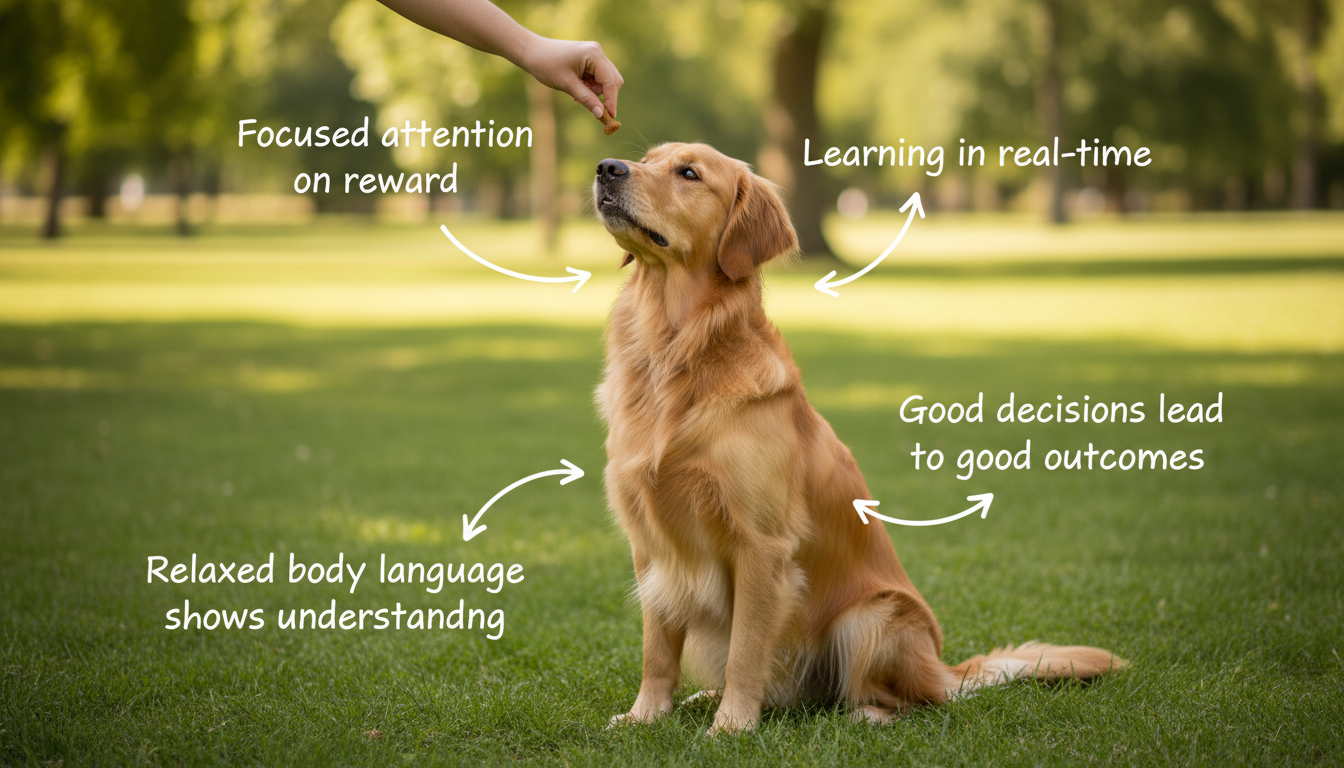
Dogs learn through the consequences of their actions - every moment is a learning opportunity.
The Language Dogs Understand: Yes and No
Dogs do not understand lengthy explanations, lectures, or complex reasoning. What dogs understand exceptionally well is clarity.
At its simplest level, all communication can be reduced to two messages:
This is why we use the Red Light, Green Light model.
Dogs thrive when expectations are clear and consistent
Green Light = Yes
"That behavior is correct."
• That worked.
• Continue.
• Good choice.
• Do that again.
Green Lights may include:
- Food rewards
- Toys & play
- Praise & affection
- Freedom
- Access to something the dog wants
A Green Light increases the likelihood that the dog will repeat the behavior.
Red Light = No
"That behavior is not the answer."
• That didn't work.
• Stop.
• Try something else.
• Make a different choice.
Red Lights may include:
- A verbal marker
- Removal of access
- A leash interruption
- Spatial pressure
- A fair correction
A Red Light decreases the likelihood that the dog will repeat the behavior.
Why Dogs Need Both
Imagine trying to play a game where you are only told when you are right but never when you are wrong.
Now imagine a game where you are only told when you are wrong but never how to succeed.
Both situations create confusion.
Dogs learn fastest when communication is clear.
Together they create understanding.
Understanding the Science of Learning
Modern learning theory recognizes four primary ways consequences influence behavior.
Positive Reinforcement
Something desirable is added to increase a behavior.
Examples:
- Food reward
- Toy reward
- Praise
- Play
- Access to desired activities
When a dog sits and receives a reward, the likelihood of sitting again increases.
Negative Reinforcement
Something unpleasant is removed when the desired behavior occurs.
Examples:
- Pressure is released when a dog responds correctly
- Spatial pressure disappears when a dog yields appropriately
The removal of pressure strengthens the behavior.
Positive Punishment
An unpleasant consequence is added to decrease a behavior.
Examples:
- A leash correction for a known behavior
- Verbal interruption
- Loss of comfort following an inappropriate choice
The goal is to reduce the future occurrence of the unwanted behavior.
Negative Punishment
Something desirable is removed to decrease a behavior.
Examples:
- Attention is withdrawn when a dog jumps
- Forward movement stops when a dog pulls
- Access to a toy is removed following inappropriate behavior
The dog learns that the behavior causes the loss of something valuable.
All four learning quadrants exist within established behavioral science.
Balanced training recognizes that dogs naturally learn through all four.
Why Consequences Matter
In nature and everyday life, consequences are unavoidable.
A puppy bites a littermate too hard and the game stops.
A dog chases livestock and encounters resistance.
A dog ignores social signals and loses access to interaction.
Animals continuously adjust their behavior based on outcomes.
Training simply creates a structured and understandable learning environment where those lessons can be taught safely and fairly.
Consequences help dogs answer an important question:
"Was that the right choice?"
Without that information, many dogs struggle to develop impulse control, reliability, and decision-making skills.
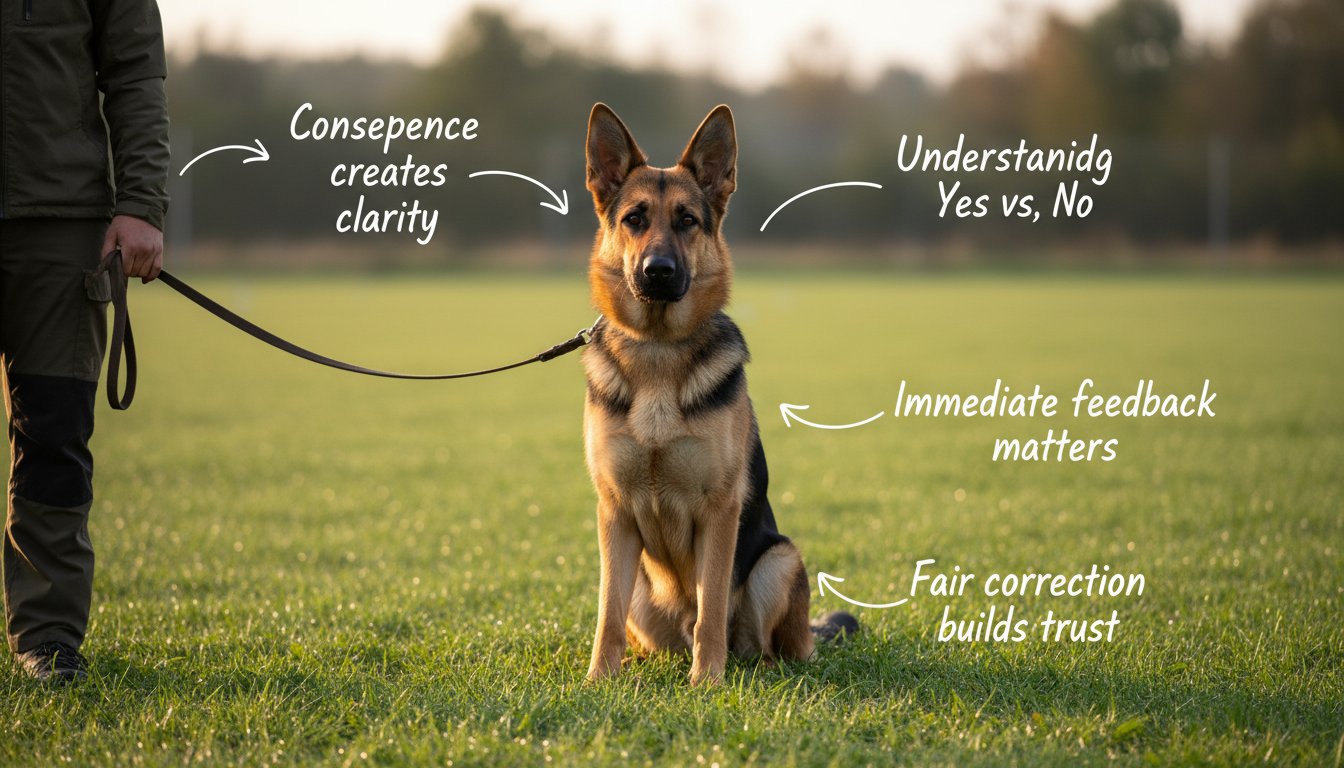
Clear and fair consequences help dogs understand which choices lead to success.
Fair Consequences
A fair consequence is one that the dog can understand and learn from.
Effective consequences are:
The purpose is NOT:
- • Revenge
- • Anger
- • Intimidation
- • Emotional release
The purpose IS:
Education
Dogs learn best when they understand both what creates success and what creates failure.
Clear communication allows dogs to make informed choices.
Building Reliable Dogs
Our goal is not simply obedience.
Our goal is understanding.
A well-trained dog learns:
Reliable dogs are not created through rewards alone or consequences alone.
They are created through clarity.
When dogs understand both Green Lights and Red Lights, they gain the information needed to confidently navigate the world around them.
That understanding creates trust, confidence, freedom, and a stronger relationship between dogs and their people.
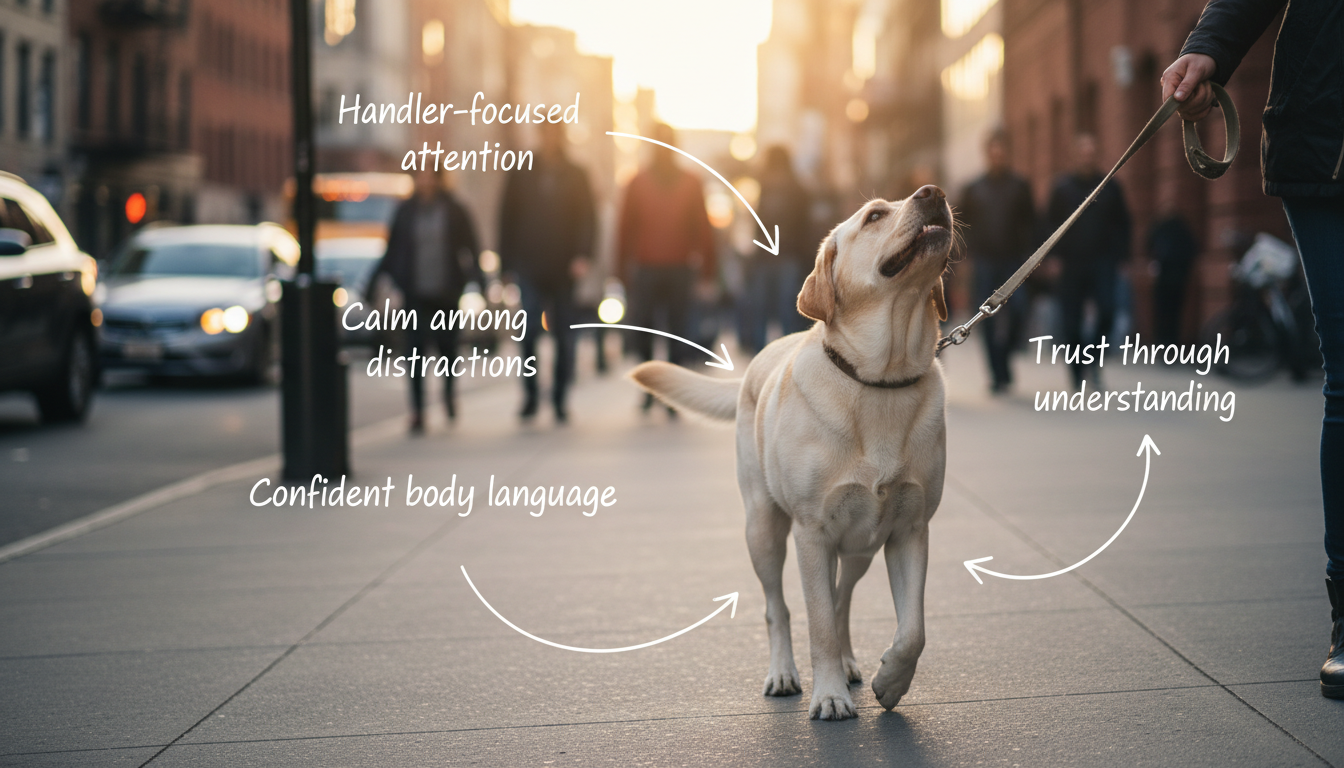
A dog who understands both Yes and No can navigate the real world with confidence.
What the Research Shows
Decades of research in animal learning, behavioral psychology, and applied animal behavior have consistently demonstrated that behavior is influenced by consequences.
Foundational work by psychologists such as B.F. Skinner established the principles of operant conditioning, showing that both reinforcement and punishment affect future behavior.
Modern behavior science continues to support several important findings:
- Behaviors that are rewarded tend to increase
- Behaviors that consistently produce undesirable outcomes tend to decrease
- Timing and consistency are critical for learning
- Different individuals respond differently to the same training approach
- Motivation, genetics, environment, and emotional state all influence learning outcomes
The scientific question is not whether consequences affect behavior—they do.
The practical question is how to apply those consequences in a way that is humane, effective, fair, and appropriate for the individual dog.
That is the goal of balanced training.
By combining rewards, guidance, management, relationship-building, and fair accountability, we help dogs develop the skills needed to succeed in the real world.
Clarity Creates Freedom
Many people think freedom comes from having fewer rules.
For dogs, freedom often comes from understanding the rules.
A dog that clearly understands Yes and No can make better decisions.
A dog that understands boundaries can be trusted with more responsibility.
A dog that understands consequences can safely enjoy greater freedom.
The goal of training is not control.
The goal is communication.